When Players Flee Victory: How Isaias Afwerki Shaped Eritrea’s Football Crisis
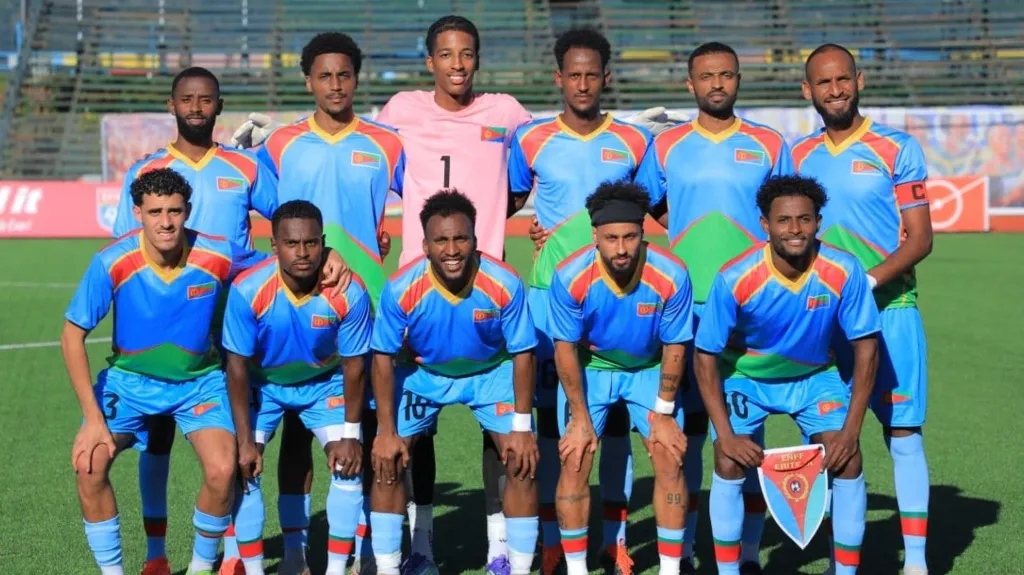
What should have been a moment of national pride has once again turned into a story of escape. After a historic qualification step, several Eritrean national team players reportedly refused to return home. This is not an isolated incident—it is a pattern.
For years, Eritrean football has been defined not by goals or trophies, but by disappearances.
At the center of this reality is the political system built under President Isaias Afwerki. Since independence, Eritrea has functioned without elections, independent media, or institutional accountability. Human rights groups have repeatedly described the country as highly restrictive, with indefinite national service and limited personal freedoms.
This matters for football.
When players travel abroad, they are not just athletes—they are individuals suddenly exposed to a different world. The repeated decisions to not return home reflect something deeper than opportunism. It reflects fear, lack of opportunity, and a system that many feel offers no future.
The latest incident follows a long history:
- Entire squads disappearing in 2009
- Multiple players seeking asylum in 2013 and 2015
- Youth teams vanishing in 2019
- And now, again in 2026
This is not coincidence. It is structural.
Eritrea has even withdrawn from international competitions in the past due to fears that players would defect. That alone reveals the depth of the issue: a national team that cannot safely participate in global sport without losing its own players.
The Real Cost: A Broken Football System
Football development requires stability—leagues, youth academies, coaching continuity, and player trust. Eritrea has none of these consistently.
When players leave:
- Team chemistry collapses
- Talent pipelines break
- International reputation declines
The result is a national team that cannot build momentum. Even when success comes, it is immediately undermined.
Over time, this creates a cycle:
- Players leave
- Team weakens
- Opportunities shrink
- More players leave
The Future of Eritrean Football
If the current political and social conditions remain unchanged, the future of Eritrean football is predictable:
- Continued defections during international tournaments
- Increased reliance on diaspora players
- Irregular participation in competitions
- Stagnation or decline in performance
There may still be moments of success—like the recent qualification progress—but they will remain fragile and temporary.
The only real turning point would come from systemic change: creating an environment where players feel safe returning home, where careers can develop locally, and where representing the national team is not a risk.
Until then, Eritrea’s football story will remain unique—but for the wrong reasons.
It will not be about how far the team can go.
It will be about how many players don’t come back.
Discussion
Share your perspective anonymously.
Bs